How God Saves the People Once Known as the “Rat Eaters”
The Musahar are perhaps the most marginalized caste in India. Within the “untouchable” groups, they occupy the lowest social status. There are over 4 million Musahars in India, with about 92.5% working as unskilled or agricultural laborers and politically oppressed. They often live in segregated, unhygienic hamlets and struggle for basic needs like housing, sanitation, and clean drinking water.
The name “Musahar” literally means “rat-eater,” an outrageous term referring to their historical practice of hunting and eating rats as a means of survival, a stigma that persists today. Literacy rates are extremely low (female literacy is around 5%, male literacy is about 9% in many areas), and children often drop out of school to join their parents in labor due to economic hardship. They are often victims of social discrimination and are sometimes forced into bonded labor.
During the Covid season, our missionary Mohit’s uncle died of a heart attack in a remote village. He went to conduct the funeral service of his uncle, and since people were not allowed to gather, very few people attended the funeral. Afterwards, Mohit looked for laborers to dig his uncle’s grave, but no one from the village was willing to help. He noticed two young men sitting outside the village and asked them for help. The young men said, “If you pay us, we will dig the grave for you.” After the burial, Mohit paid them, and both young men shed tears of relief and thanks as they accepted the money. They said, “We are from the Musahar community. Our village is four miles away. Our families are starving, and we came to find work, and we are so happy we found you.” The following day, Mohit visited their village and saw the poor and unlivable conditions, starvation of the people and informed us. With help from Exciting Word, Mohit and some other brothers carried food and medicine to the village and helped the people. Through that, Mohit built a relationship with them. At the same time, God was moving in Mohit’s heart with love and compassion for the Musahar. In 2021, Mohit moved to a Musahar village and started to reach out to the community. It was hard for him go to their village as a Christian minister, so he enrolled in a short social service course. There he met his classmate Rema, who also had a vision to reach the Musahar community with the Gospel. Later they married and began full-time ministry.
Responding to the Needs of the Times
In our 2022 outreach, one of our areas of focus was the Musahar people. Through the outreach, we were able to show the Jesus movie in 32 different Musahar villages. Soon after the outreach, Mohit and his wife, Rema, were sent to follow up the outreach and continue to lead the prayer groups started by the outreach teams. They both had dedicated their lives to the Lord, and He directed them that the whole purpose of their lives was to turn the Musahar from darkness to the light of the gospel. They serve as social workers in the villages (because they were certified social workers by the government, it gives easy access to the village). For the past three years, Mohit and Rema have been reaching the unreached, telling the untold, touching the untouchable, loving the unlovable, feeding the hungry, clothing the naked, caring for the sick, eliminating social imbalance, uplifting their lives, enhancing their situation and using education as an effective tool to give a voice to the voiceless.
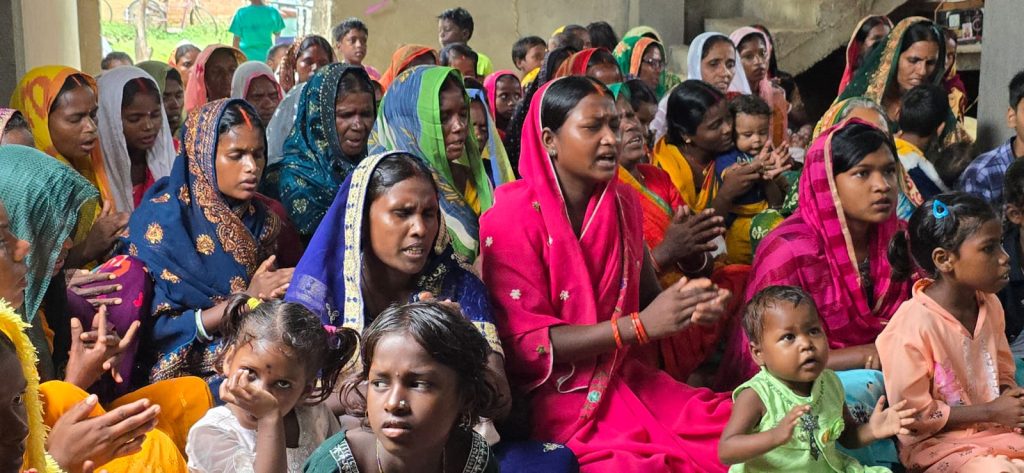
A Ray of Hope Shines in the Darkness
During our visit to one of the areas where the Musahar lived in the last week of November, we spent two days with Mohit and Rema. They took us to different Musahar villages. Actually, the Musahar are forced to live on the outskirts of the villages. It was an unforgettable experience. The first sight of the village and its surroundings left us speechless. As soon as we arrived, the children rushed to welcome Mohit and Rema. Since Sherly and I were new to the area, we stood like strangers, looking at the children, the women, and the surroundings, smiling at them. We could tell that the people endured extreme poverty and unsanitary living conditions. The children were wearing only the bare minimum of clothing. They appeared malnourished, dirty, and unkempt. The women hid their faces, looking very sad and depressed. Despite this, their faces lit up when they saw Mohit and Rema. The young men and women came close and touched our feet (as a show of respect to elders). We touched their heads and blessed everyone. We saw they felt at ease with Mohit and Rema because they were beacons of hope in their helplessness.
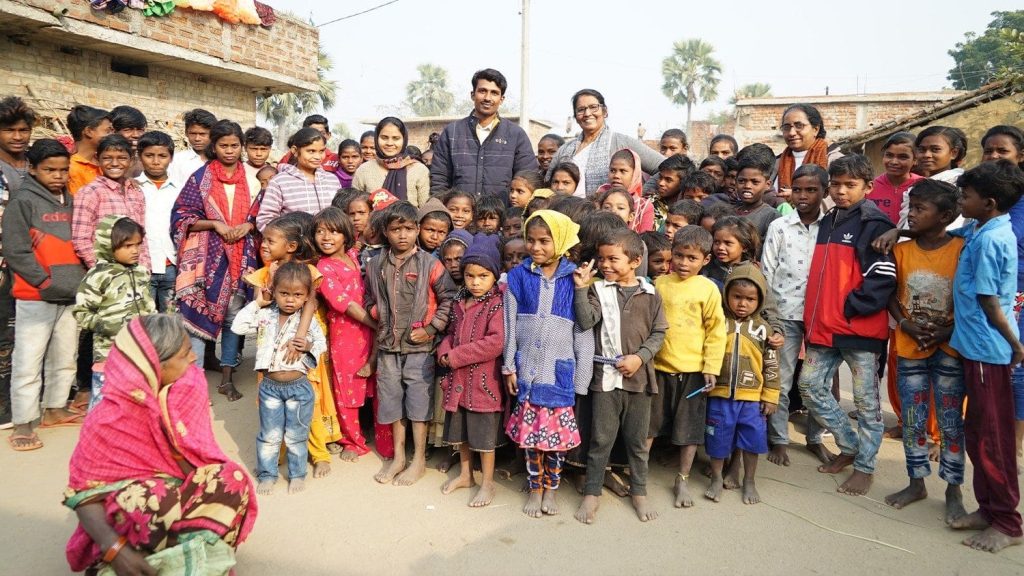

Through Mohit and Rema our Lord is touching hundreds of men and women in the Musahar community. As the Bible says, “the people who sat in darkness have seen a great light. And for those who lived in the land where death casts its shadow, a light has shined.” (Matt. 4:16 NLT) Today they are reaching out to 39 Musahar villages. They have started 29 house churches and baptized more than 650 believers in the Musahar community. Building on the work they began, we recently started our first house church leaders’ training center, with 24 young Musahar men and women. And in addition to the churches, Mohit and Rema are leading 11 Sunday Schools where, with the help of local young women, 780 Musahar children are learning to read and write, and hear about the Lord. Mohit and Rema believe that the Gospel can eradicate societal disparities and improve peoples’ lives.
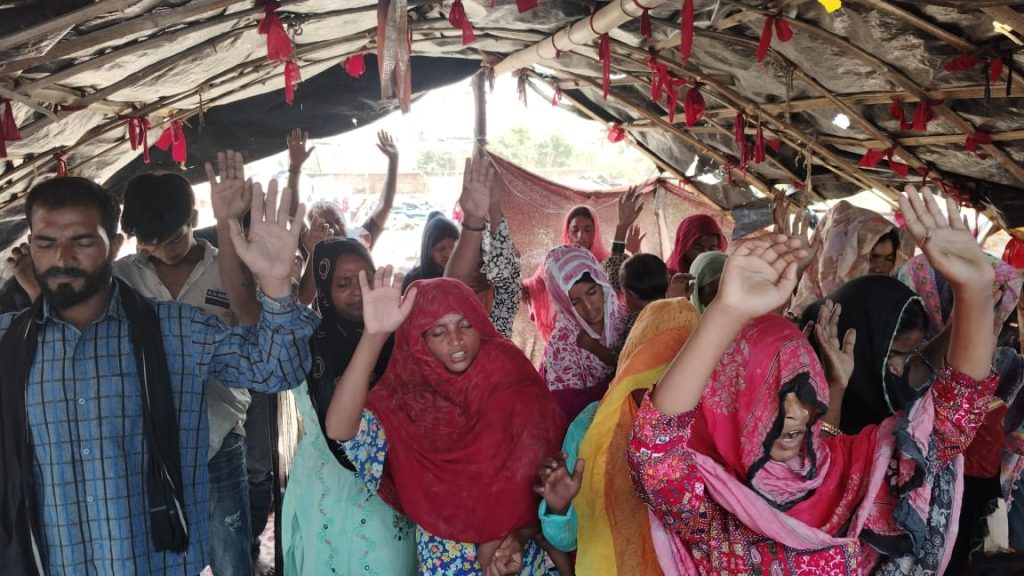
After visiting 7 house churches in different villages and meeting with new believers from the Musahar community, seeing their transformed lives and having fellowship with them, we are confident the light of the gospel is shining in the darkest pockets of India, breaking boundaries, barriers, castes and creeds, rituals and traditions, and reaching into every tribe irrespective of their social status. Mohit and Rema’s dedication to the untouchable Musahar people is a true witness of how God is using His people to transform the lives of many.
Basic Needs of the Musahar
If these testimonies have touched your heart and you want to be a part of helping these precious people, we have identified two tangible ways you can help them.
First, we want to provide floor mats for the children, as they sit in the churches and the Sunday school programs. We saw many children sitting directly on the dirt floor because they had nothing to spread out on the floor, or if they did have something, it was tattered and torn. Simple cotton rugs 10×20 feet will cost $65 each.
Second, we learned that there are many widows in every village. Mohit told us that because of the custom of early marriage in their culture, the Musahar girls from 14 to 16 years old are married to older men. When these girls reach the age of 35-40, their husbands often die, and their widows are left to carry the burden of supporting the family and raising several children. To help Mohit and Rema as they are trusting in God in caring for these widows, we have promised to help them start 5 sewing centers in different villages, where these widows and other women can learn to stitch clothes to earn some extra money for their family. Each sewing center will have 4 regular sewing machines and one “overlock” sewing machine. Unlike a standard sewing machine, an overlocker performs three critical tasks in one seamless operation: it sews sturdy seams, trims excess fabric, and neatens raw edges to prevent fraying. This multifunctional tool is a cornerstone in the garment manufacturing industry, where speed and precision are paramount. With an overlock machine, entire garments—from casual T-shirts to tailored dresses—can be crafted in mere minutes. Teaching the women to sew, and giving them access to these machines, can drastically improve their lives and break the cycle of poverty in these communities.
The regular sewing machines are $50 each, and the overlock sewing machine is $100, so each sewing center will require between $300 and $350 to get it started, and then there will be some ongoing operating costs plus a small stipend for the teacher.
If you want to assist with any of these expenses, just let us know when you give. And may the LORD richly bless you with His favor and His provision in your life.